
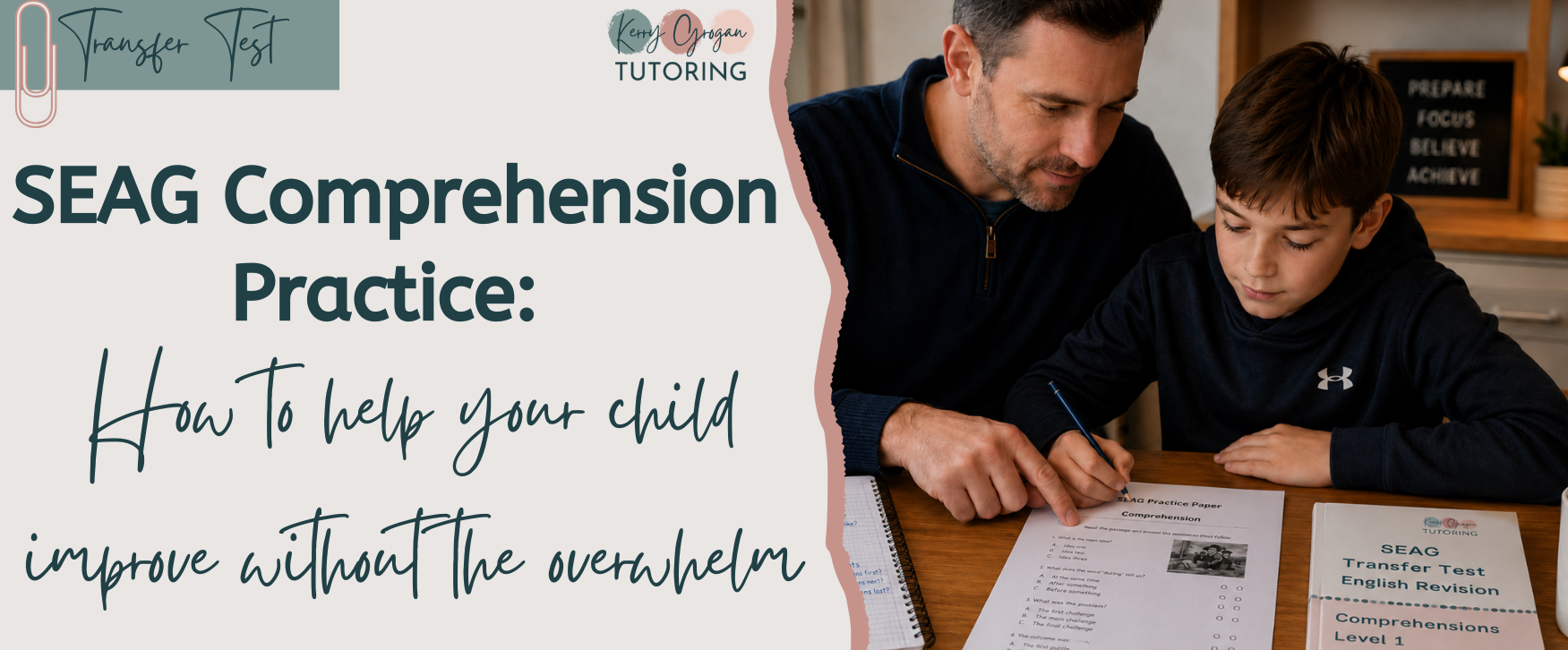
SEAG comprehension practice can be a real drain on your child or it can be where they shine! Has your child ever sat down to a SEAG comprehension practice passage, taken one look at the wall of text, and just… shut down before they’ve even started?
Maybe they sigh. Maybe they get that glazed look. Maybe they suddenly need the toilet, a snack and a glass of water all at once (funny how that happens the second a long text appears). If you’ve watched this play out at your kitchen table, take a breath, because you are not doing anything wrong and neither is your child.
Comprehension is the bit of SEAG preparation that worries parents the most, and I get why. Let me help you unscramble it, because doing SEAG comprehension practice well isn’t about doing more of it. It’s about doing it in a way that doesn’t overwhelm your wee one (or you).
Why does comprehension feel so overwhelming?
Here’s the honest truth. Comprehension is hard because it asks your child to do about five things at once. Read a long passage, hold it all in their head, understand what’s being asked, find the evidence, and then choose the right answer, all while the clock is ticking. That’s a big ask for a ten year old.
So when a child shuts down at a comprehension passage, they’re not being lazy or difficult. They’re overwhelmed. And here’s the thing I really want you to hear. If we respond to that overwhelm by piling on more passages, we make it worse, not better. Trust me on this, I’ve seen it happen.
Let me take a wee trip down memory lane. When I was at school, I was a reader. I’d happily disappear into a book for hours. But put a timed comprehension in front of me and something changed, my chest would tighten and my brain would go fuzzy. The skill was there. The calm wasn’t. And that’s exactly the gap we need to close for our children, the gap between being able to do it and feeling able to do it.

Start smaller than you think
Right, let me be blunt with you… Most children are given comprehension passages that are too long, too soon. There. I said it.
When you’re starting SEAG comprehension practice, you do not need to begin with a full-length SEAG practice paper and twenty questions. In fact, please don’t. Start with a single paragraph and two or three SEAG practice questions. Let your child feel what success tastes like before you stretch them.
A few gentle ways to start smaller:
- Use a short paragraph from a book your child already loves, and ask two simple questions about it.
- Read a passage together, out loud, before they answer anything. Hearing it takes the fear out of the page.
- Do one question type at a time. Spend a week just finding information in the text, then a week on vocabulary, and so on.
- Stop while they’re still enjoying it. Always leave them wanting a little more, not relieved it’s over.
Build the muscle gently and the longer passages stop being scary, because by the time you get to them, your child already knows they can do this.

Read for pleasure, not just for practice
I cannot say this enough. The single best thing you can do for your child’s transfer test comprehension isn’t another worksheet. It’s reading for the sheer joy of it.
A child who reads for pleasure is quietly building vocabulary, understanding how stories work, and learning to picture what they read, all the things comprehension questions test, without a single practice paper in sight. So let them read comics, football annuals, joke books, whatever lights them up. It all counts. It really does.
This is the lovely bit. Reading for pleasure feels like a break, but it’s doing the heavy lifting all the same. So when your child curls up with a book on a Sunday afternoon, that’s not them skiving off their SEAG comprehension practice. That is the practice, just the calm, sneaky kind.

Spotting the difference between “can’t” and “won’t”
When your child struggles with a comprehension question, it helps to gently work out what’s actually going on, because the fix is different each time.
- If they can’t find the answer, they may need to be shown how to go back into the text and hunt for evidence rather than answering from memory.
- If they won’t even attempt it, that’s usually overwhelm or fear of getting it wrong, and that needs reassurance and smaller steps, not more drilling.
- If they get it wrong in a rush, that’s a timing and calm issue, not a comprehension one.
You know your child best, so you’re brilliantly placed to spot which one it is. And once you know the why, the what to do becomes so much clearer.

Keep it calm, keep it short, keep it kind
Here’s what I’d love you to take from all of this. SEAG comprehension practice that’s short, calm and regular will always beat long, stressful sessions that leave everyone frazzled. Ten focused minutes where your child feels capable is worth more than an hour where they feel like they’re drowning.
Here’s the thing, the pressure is the enemy of comprehension, not the helper. A calm child reads better, thinks better and answers better. A stressed one freezes, the same way I used to.
So protect the calm. Watch for the signs of too much, the sighing, the tears, the “I can’t do this,” and when you see them, do less, not more. That’s not falling behind. That’s good parenting.

Want a gentle, ready-made way to start?
If everything I’ve said about starting small sounds lovely in theory but you’re not sure where to actually begin, I’ve got something that might help. My Level 1 SEAG Comprehension book is built for exactly this, short, manageable passages that build your child’s confidence one calm step at a time, so you’re not left cobbling bits together yourself or facing a scary full-length paper too soon.
Unlike a lot of SEAG practice books and booklets that throw long passages at children from day one, this one starts gently and grows with them. It does the “start smaller than you think” bit for you, which means less stress for you and a gentler start for your wee one. You can find it here.
More information on SEAG comprehension practice
If this has helped and you’d like to keep going, here are a few of my own posts plus some trusted places to read more:
8 Ways to Make Reading Comprehension More Fun
10 tips to improve children’s reading comprehension at home
Fun & Effective Reading Comprehension Activities for All Ages
5 Subtle Signs of SEAG Revision Burnout in Your Child and How to Help
The importance of reading for your child: 7 benefits of reading outside the classroom
You’ve got this
Whatever stage you’re at, please don’t worry that you’re getting it wrong. Comprehension is a skill that grows slowly, with reading, with reassurance and with time. Your child will get there, and they’ll get there far quicker if the journey is calm. Short, calm and kind.
That’s the whole secret to SEAG comprehension practice that actually works.


